Révolution mexicaine
Pedro PáramoThe Révolution mexicaine appears in the novel not as a continuous national chronicle but as armed upheaval entering the life of Comala and the Media Luna estate. Its fighters contest a government they call corrupt and a landowner they regard as a powerful thief; Pedro Páramo, in turn, tries to convert their revolt into an alliance. Against this conflict, the novel places the estate’s everyday instruments of control: unpaid debts, property, cattle, and the men available to move or defend them.
Land, debt, and the estate
The economic order surrounding the revolution is conveyed through concrete calculations. When Fulgor Sedano reports that business is bad and the last cattle have been sold, Pedro does not first ask how much is owed. He asks to whom. The distinction matters: he wants to identify the creditors and settle accounts in a sequence he can control. The Preciado women are owed the most and have received the least, since Pedro’s father had consistently put them last. Their property at Enmedio remains in Dolores Preciado’s possession, and Pedro directs Fulgor to ask for her hand in marriage. He tells his agent to say that he loves her, then makes clear that her money is the point. Marriage, debt, and the acquisition of land thus belong to the same calculation of power.
Pedro also tells Fulgor that there will be no fences because the land has no enclaves, and orders him not to speak of it. He releases Fulgor from his duties as estate manager and tells him to forget the Media Luna while he handles the marriage arrangement. Fulgor’s surprise at the young man’s shrewdness contrasts with his late employer Don Lucas Páramo’s earlier judgment that Pedro was useless. The estate’s command over property is not merely inherited in this account: it is actively reorganized through Pedro’s decisions.
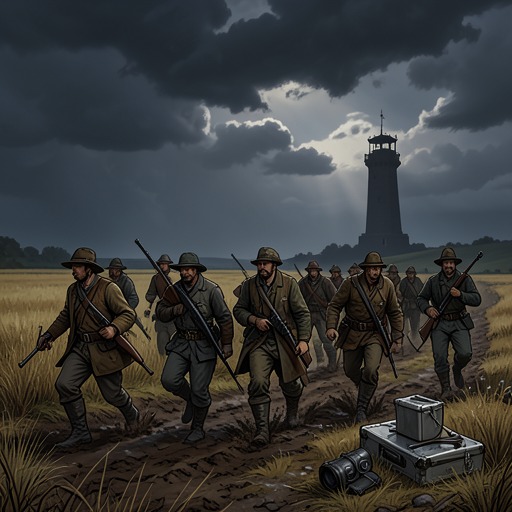
That command has a physical reach. In heavy rain, the great gate of the Media Luna opens and horsemen leave in successive groups until two hundred have ridden out into the countryside. Fulgor directs them to move the Enmedio cattle beyond what had been Estagua and to drive the Estagua herd to the heights of Vilmayo. The episode is not identified as a battle, but it shows the estate mobilizing men and livestock at scale. The same resources that sustain local dominance form the material setting in which armed challengers arrive.
Armed opposition at the Media Luna
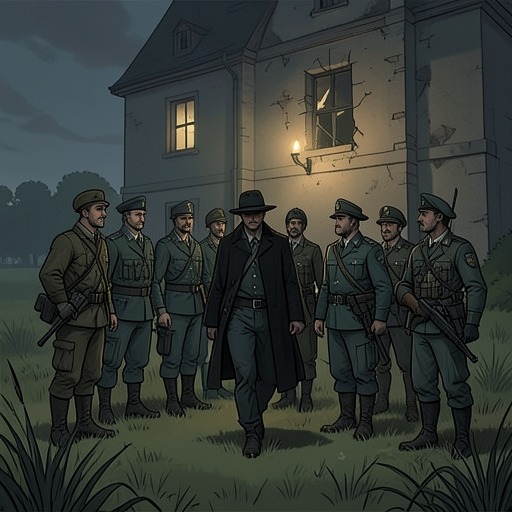
One night, about twenty armed men appear, carrying rifles and ammunition belts. Pedro invites them to dinner. They sit without removing their hats and wait in silence; the scene registers their presence through the meal as well as through their weapons, as they smell the chocolate and eat tortilla after tortilla with black beans. Pedro watches them without recognizing their faces. The Boa waits in the shadow behind him, a reminder that Pedro, too, has armed force close at hand.
The visitors say they have taken up arms, but one of them gives the revolt a sharper purpose. They have rebelled against the government and against Pedro because they are tired of enduring both: the government is vile, and Pedro, they say, is a bandit and a great, sly thief. Their words make clear that the local conflict is not simply an abstract dispute with the state. Pedro himself is named as an object of opposition, and the rebels connect his wealth and conduct to the grievances driving their action.
Pedro asks how much they need to make their revolution and offers that he might help. The response is practical rather than reverential: a companion advises one of the men not to antagonize a rich man, since a movement needs a wealthy supporter, and turns the question of money over to another. Pedro’s offer does not dissolve the accusation against him. Instead, it exposes the unstable bargain at the heart of the scene: men who have taken arms against his power consider whether that same power can be put to use for their cause.
Expanding forces and shifting loyalties
Later, Damasio answers Pedro’s question about reports that he has been beaten. He denies it and claims that his band remains intact, bringing seven hundred men, along with others who joined on the way. He explains that some of his associates, tired of inactivity, fired on a small group of poorly equipped men who turned out to be an entire army. He identifies them as forces associated with Pancho Villa. These northerners, he says, plunder whatever they find; they are powerful, and no one can deny it. Pedro advises Damasio to join the stronger side, and Damasio says that he is with them.
The report gives the upheaval a scale beyond the group at Pedro’s dinner table: armed bands can grow, collide, and change alignment as they move through the region. Yet the account offers no settled national program or clear sequence of victories. The emphasis falls on what the people present can see and use: numbers, weapons, plunder, and the advantage of attaching oneself to the powerful. The Boa later returns with another brief update, saying that they are now with Venustiano Carranzo. The compressed announcement makes shifting allegiance part of the novel’s experience of the conflict, without explaining the change in detail.
Revolution beside private power
The novel places the armed struggle alongside, rather than apart from, the estate’s existing coercive order. Pedro can calculate debts, arrange a marriage to obtain property, send out two hundred horsemen, keep the Boa waiting in the shadows, and offer financial help to rebels who denounce him. These acts are not presented as equivalent, but together they show how economic control and armed influence occupy the same local world. The rebels’ grievance recognizes Pedro as a political power in his own right, even as he attempts to treat their revolution as a transaction.
The violence of the wider upheaval does not displace the novel’s other forms of violence or determine every later event. After Susana San Juan is buried, Comala remains absorbed in a loud celebration that began despite the funeral bells. Pedro stays in his room, falls silent, and vows revenge on the village. He then withdraws his support and lets Comala go hungry. The episode connects the estate’s command over food to Pedro’s personal retaliation, while the revolution’s armed factions remain part of the surrounding instability. In this account, political change reaches the village as a succession of forces and bargains; it does not automatically free Comala from the private power already governing it.